Retro Stitch: A Vintage Display Font for Makers and Designers
Let me tell you about a recent design afternoon where Retro Stitch truly saved the day. I was working on a mockup for a new candle line—a collection inspired by cozy, retro kitchens. The branding idea was clear, but my usual sans-serif labels felt too sterile. I needed something with charm, something that whispered "handmade" and "vintage" before a customer even read the scent name. That’s when I loaded up Retro Stitch. As I typed out “Sunshine Lemonade” on my candle label template, it clicked. The font’s playful, stitch-like characters, with their slightly irregular baseline and those charming open gaps, instantly brought the design to life. It wasn't just text anymore; it was a key part of the product’s story.
The Visual Personality of a Maker-Friendly Font
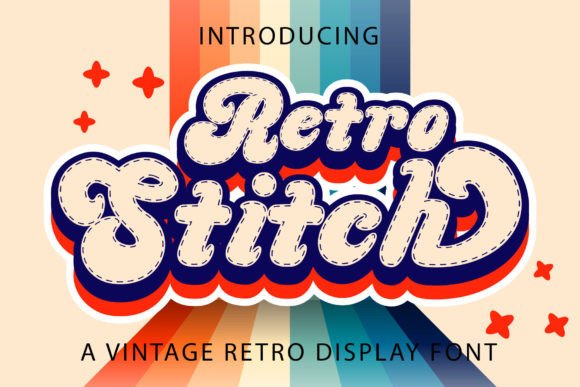
Retro Stitch is, first and foremost, a display font with a warm, approachable personality. It doesn’t scream; it invites. The design evokes the feel of hand-stitched lettering or vintage embroidery patterns, giving it an inherently crafty and nostalgic mood. This isn't a cold, modern typeface. Its charm lies in those details: the subtle imperfections, the friendly rounded edges, and the way each letter feels like a small, crafted piece. For anyone creating products that tell a story—whether it’s a handmade soap, a wedding invitation suite, or a boutique clothing tag—this font adds a layer of creative appeal that generic fonts simply cannot. It communicates care, creativity, and a touch of the past, which resonates deeply with customers looking for authenticity.
Bringing Retro Stitch to Life on Real Products
Testing a font on screen is one thing; seeing it rendered on actual materials is another. Over the last few weeks, I've put Retro Stitch through practical tests on various mediums, and its performance is impressive for a decorative typeface.
For Physical Merchandise and Labels
On physical items, Retro Stitch holds its character beautifully. I used it for:
- Candle Labels & Product Packaging: As mentioned, it transformed simple labels into standout design elements. The font size needs to be generous—I found 24pt or larger on the final print was ideal for clear readability of the product name.
- Greeting Cards & Invitations: For a birthday card suite, Retro Stitch on the main headline ("Celebrate!") created a joyful, festive anchor. Pairing it with a simple, clean sans-serif for the body text (date, time, details) kept everything legible and balanced.
- Tote Bags & Apparel: In a test for a simple cotton tote, the font's stitched texture translated perfectly into the idea of handmade. It works excellently as a single-line slogan or a shop name.
- Signs & Wall Art: Whether for digital printable wall art or a mockup for a small wooden farmhouse sign, Retro Stitch brings a decorative, editorial quality. It’s perfect for short quotes or welcoming messages.
For Digital Products and Shop Presence
Its utility extends beyond physical goods. For digital creators, Retro Stitch adds a unique touch to:
- Printable Planner Pages & Digital Stationery: Headers and section titles in a planner PDF gain a lovely, personalized feel.
- Shop Branding & Social Media Graphics: Using it consistently for your shop name in your Etsy banner, Instagram graphics, or packaging inserts builds strong, recognizable brand identity. Its retro vibe can define your entire shop’s aesthetic.
- Logo Design: For a small maker business, Retro Stitch can serve as the foundational type for a logo, especially when combined with a simple graphic icon.
In all these cases, the font elevates the perceived quality and emotional appeal of the product. It helps your items stand out in a crowded marketplace by offering a distinct visual voice.
Readability and Practical Application Advice
Retro Stitch is a display font, and that designation is key to using it successfully. It’s designed for headlines, titles, names, and short phrases—not for body text. Here’s some hands-on readability advice:
- Cutting Machines (Cricut/Silhouette): It cuts well due to its generally sturdy letterforms. Ensure your letters are large enough; very small sizes (under 1 inch height) might make the open gaps in the design too fine and fragile for weeding.
- Small Stickers & Product Tags: Use it for the primary product name only, not for lengthy descriptions or instructions. Keep the text count low and the font size high.
- Printed Cards & Mockups: On printed materials, it looks best with a little extra spacing between letters (tracking) to let its decorative nature breathe. Avoid dense, tight layouts.
- Font Pairing is Essential: To maintain professionalism and readability, always pair Retro Stitch with a more neutral font for supporting text. A classic sans-serif like Arial or Open Sans, or a simple serif like Georgia, for body copy, details, and paragraphs creates a harmonious and functional hierarchy.
What Retro Stitch is Not Suitable For: Avoid using it for long paragraphs, legal disclaimers, technical instructions on labels, or any text that requires rapid, effortless reading. Its decorative nature can hinder readability at small sizes or in lengthy blocks.
Technical Considerations for Commercial Use
Before you commit to using Retro Stitch for your shop or products, do a thorough check of its technical specs. This is a crucial step for any commercial maker.
Open the font files and examine what’s included. Look for:
- Styles & Weights: Does it come in only one weight, or are there bold or light options? Retro Stitch typically comes as a single weight, which means you’ll use size and pairing to create contrast.
- Alternates, Ligatures, or Swashes: These extra characters can add wonderful variety for logos or special words, allowing for more custom-looking designs.
- File Formats: Ensure you have the formats you need. For digital design, .OTF or .TTF is standard. For some cutting machine software or web use, specific formats might be required.
- Multilingual Support: Check if it supports the characters you need (e.g., accents for European languages).
- The License: This is the most important part. Read the commercial license carefully. Confirm that it allows use for physical products (merchandise), digital downloads (printables), and branding for a small business. Never assume a font is free for commercial use unless the license explicitly states it.
Taking these steps ensures your creative use of Retro Stitch is also professionally sound, protecting your business and respecting the designer’s work.
In the end, Retro Stitch is more than just a cool vintage-style font. It’s a design asset that can become the visual heartbeat of a creative brand. When used thoughtfully—for those special headlines, product names, and branding moments—it infuses your work with a warmth and character that feels genuinely handmade. It reminds us that in a world of mass-produced aesthetics, the details, like a beautifully chosen typeface, truly make our creations shine.